देहिनोऽस्मिन्यथा देहे कौमारं यौवनं जरा ।
तथा देहान्तरप्राप्तिर्धीरस्तत्र न मुह्यति ॥
तथा देहान्तरप्राप्तिर्धीरस्तत्र न मुह्यति ॥
देहधारीके इस मनुष्यशरीरमें जैसे बालकपन, जवानी और वृद्धावस्था होती है, ऐसे ही देहान्तरकी प्राप्ति होती है । उस विषयमें धीर मनुष्य मोहित नहीं होता ॥
— Krishna
भगवद् गीता · 2.13
English
Just as the embodied one passes through childhood, youth, and old age in this body, so too it passes into another body. The wise are not deluded by this.
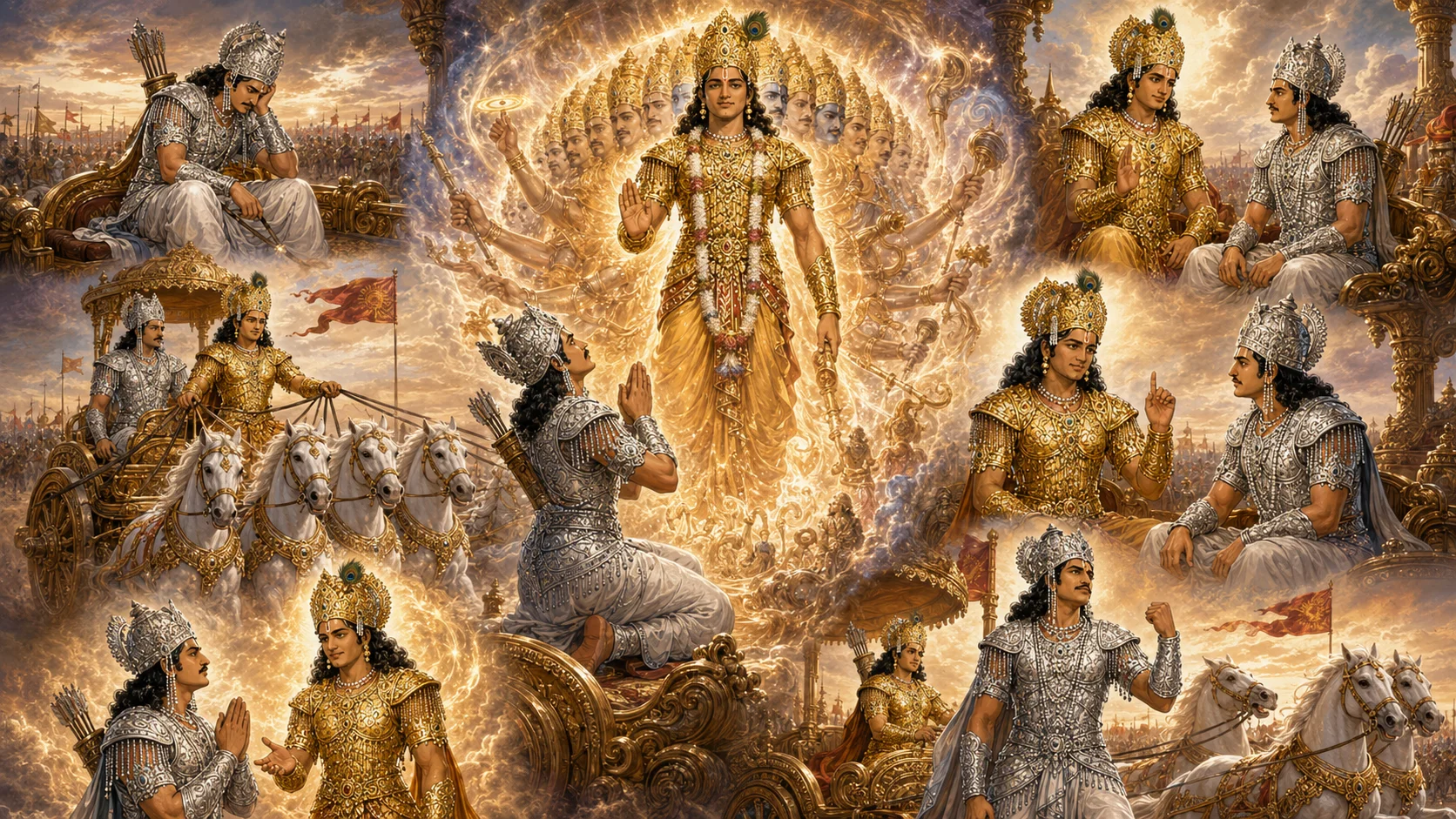
It shifts attention from the body’s changing stages to the steady awareness that outlives them.
इस श्लोक का अर्थ
The body changes through stages, and the one living in it moves on to another body. A steady person does not get confused by this.
संदर्भ और टिप्पणी
On the battlefield of Kurukshetra, Arjuna is frozen by grief. Krishna first reminds him that no one was truly born or lost, then gives a human example: the body moves from childhood to youth to old age, and the embodied one moves on as well.
आज के जीवन में महत्व
You watch an old photo and barely recognise yourself. The face, voice, and fears have changed — yet something in you has kept witnessing all of it.
“There is relief in seeing change as natural, not tragic.”
संबंधित विषय: atman (12 श्लोक), sankhya (11 श्लोक)