न हि देहभृता शक्यं त्यक्तुं कर्माण्यशेषतः ।
यस्तु कर्मफलत्यागी स त्यागीत्यभिधीयते ॥
यस्तु कर्मफलत्यागी स त्यागीत्यभिधीयते ॥
कारण कि देहधारी मनुष्यके द्वारा सम्पूर्ण कर्मोंका त्याग करना सम्भव नहीं है । इसलिये जो कर्मफलका त्यागी है, वही त्यागी है ऐसा कहा जाता है ॥
— Krishna
भगवद् गीता · 18.11
English
For embodied beings, total renunciation of action is impossible. Therefore, one who renounces the fruits of action is called a renunciant.
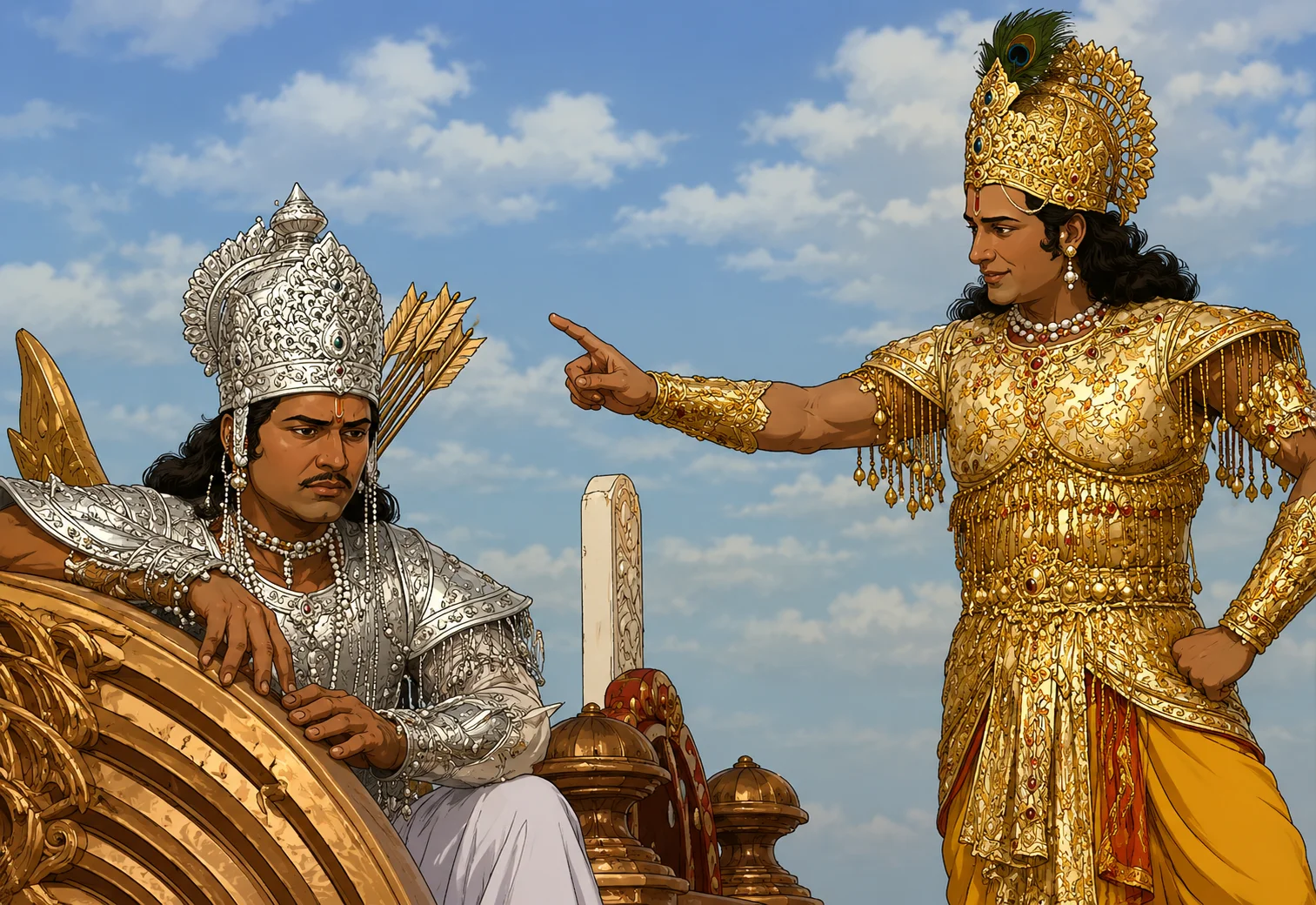
It shifts the mind from escaping responsibility to releasing ownership of outcomes.
इस श्लोक का अर्थ
A person with a body cannot give up all action. Real renunciation means giving up attachment to the results, not abandoning work itself.
संदर्भ और टिप्पणी
On the Kurukshetra battlefield, Arjuna is still frozen while Krishna teaches him the final synthesis of renunciation. Here Krishna clarifies that embodied life always involves action, so true renunciation is not quitting work but letting go of the reward.
आज के जीवन में महत्व
You send the hard message, hit submit, and wait for the fallout. You cannot control every consequence, but you can stop clinging to what happens next.
“There is relief in knowing you do not need to escape action to be free.”
संबंधित विषय: vairagya (51 श्लोक), tyaga (14 श्लोक), sannyasa (12 श्लोक)