रजो रागात्मकं विद्धि तृष्णासङ्गसमुद्भवम् ।
तन्निबध्नाति कौन्तेय कर्मसङ्गेन देहिनम् ॥
तन्निबध्नाति कौन्तेय कर्मसङ्गेन देहिनम् ॥
संस्कृत पाठ0:00
हे कुन्तीनन्दन तृष्णा और आसक्तिको पैदा करनेवाले रजोगुणको तुम रागस्वरूप समझो । वह कर्मोंकी आसक्तिसे शरीरधारीको बाँधता है ॥
— Krishna
भगवद् गीता · 14.7
अंग्रेज़ी अनुवाद
Know rajas as passion-born, born of craving and attachment. It binds the embodied being through attachment to action, O son of Kunti.
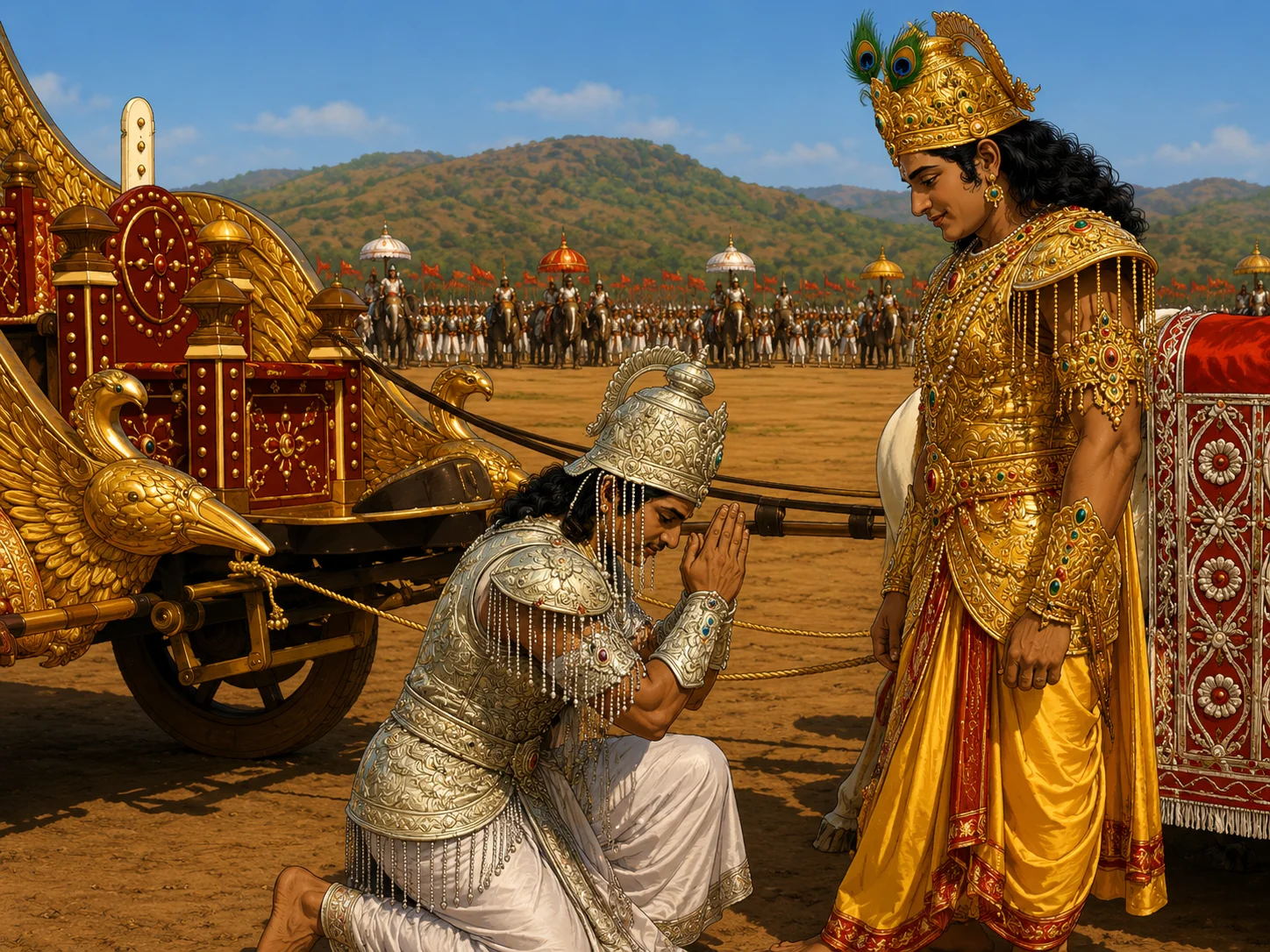
Rajas is born of craving, and it ties a person to the restless need to keep doing.
इस श्लोक का अर्थ
Restless desire and attachment create rajas. That force traps a person by making them cling to action and its rewards.
संदर्भ और टिप्पणी
Arjuna still stands frozen while Krishna explains the three forces that shape human conduct. After describing sattva, Krishna now names rajas: the force of craving and attachment that ties the embodied person to restless doing.
आज के जीवन में महत्व
A shopkeeper who keeps rearranging stock and chasing one more sale, even after closing, may call it drive. Krishna would call it rajas, craving that binds a person through attachment to action.
“You can see how craving quietly turns action into bondage.”
संबंधित विषय: gunas (47 श्लोक), rajas (21 श्लोक)