दुःखेष्वनुद्विग्नमनाः सुखेषु विगतस्पृहः ।
वीतरागभयक्रोधः स्थितधीर्मुनिरुच्यते ॥
वीतरागभयक्रोधः स्थितधीर्मुनिरुच्यते ॥
दुःखोंकी प्राप्ति होनेपर जिसके मनमें उद्वेग नहीं होता और सुखोंकी प्राप्ति होनेपर जिसके मनमें स्पृहा नहीं होती तथा जो राग, भय और क्रोधसे सर्वथा रहित हो गया है, वह मननशील मनुष्य स्थिरबुद्धि कहा जाता है ॥
— Krishna
भगवद् गीता · 2.56
English
The steady-minded sage is unshaken by sorrow, free from craving in joy, and beyond attachment, fear, and anger.
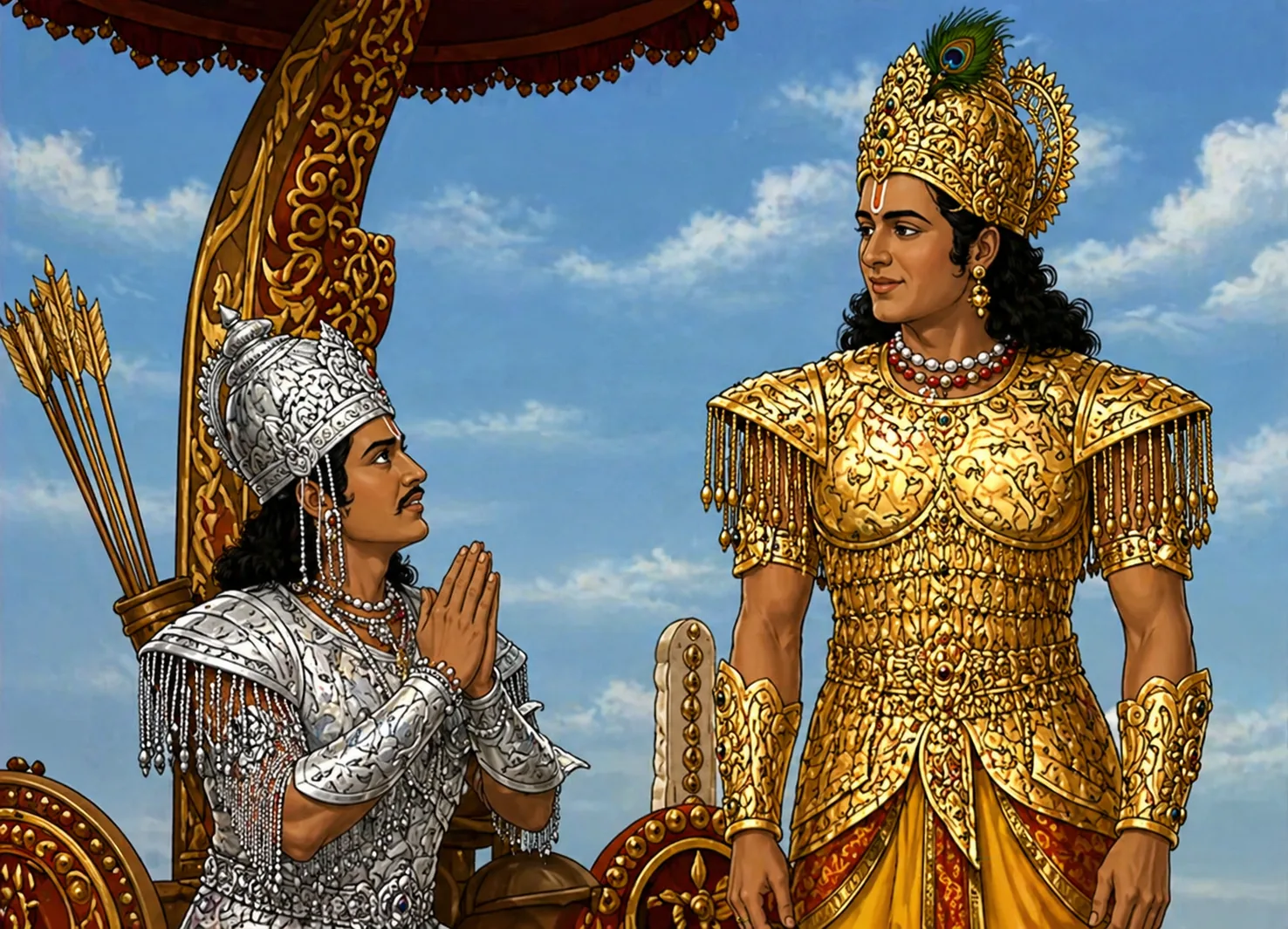

It shifts attention from chasing comfort to building inner steadiness that stays intact under praise, loss, and pressure.
इस श्लोक का अर्थ
A truly steady person stays calm in hardship, does not chase pleasure, and is free from attachment, fear, and anger.
संदर्भ और टिप्पणी
On the Kurukshetra battlefield, Arjuna has asked what a person of steady understanding looks like. Krishna answers with a portrait of inner balance: the sage is not shaken by pain, does not chase pleasure, and is no longer driven by attachment, fear, or anger.
आज के जीवन में महत्व
You get a painful message, then a flattering one, then another setback. Your mood whiplashes with each ping. This verse points to a steadier way: let events pass through without letting them seize the mind.
“You do not have to be ruled by every rise and fall. Calm can remain while life changes.”
संबंधित विषय: sattva (26 श्लोक), equanimity (23 श्लोक), attachment (20 श्लोक)