देहधारी विवेकी मनुष्य देहको उत्पन्न करनेवाले इन तीनों गुणोंका अतिक्रमण करके जन्म, मृत्यु और वृद्धावस्थारूप दुःखोंसे रहित हुआ अमरताका अनुभव करता है ॥
— Krishna
❋
भगवद् गीता · 14.20
English
The embodied one who rises beyond these three qualities, which arise from the body, is freed from birth, death, old age, and sorrow, and attains immortality.
श्लोक क्रम में — हर संस्कृत शब्द और नीचे उसका अर्थ। किसी शब्द पर जाकर उसे देखें।
गुणान्qualitiesएतान्theseअतीत्यhaving gone beyondत्रीन्threeदेहीthe embodied oneदेहसमुद्भवान्born from the bodyजन्म-मृत्यु-जरा-दुःखैःby birth, death, old age, and sorrowविमुक्तःfreedअमृतम्immortalityअश्नुतेattains
शब्दशःqualities · these · having gone beyond · three · the embodied one · born from the body · by birth, death, old age, and sorrow · freed · immortality · attains
श्लोक को समझें
✦
It shifts attention from managing symptoms of change to seeing the self as untouched by them.
A person who rises above the three qualities that shape the body is no longer bound by birth, death, old age, or sorrow.
02
युद्धभूमि पर
संदर्भ और टिप्पणी
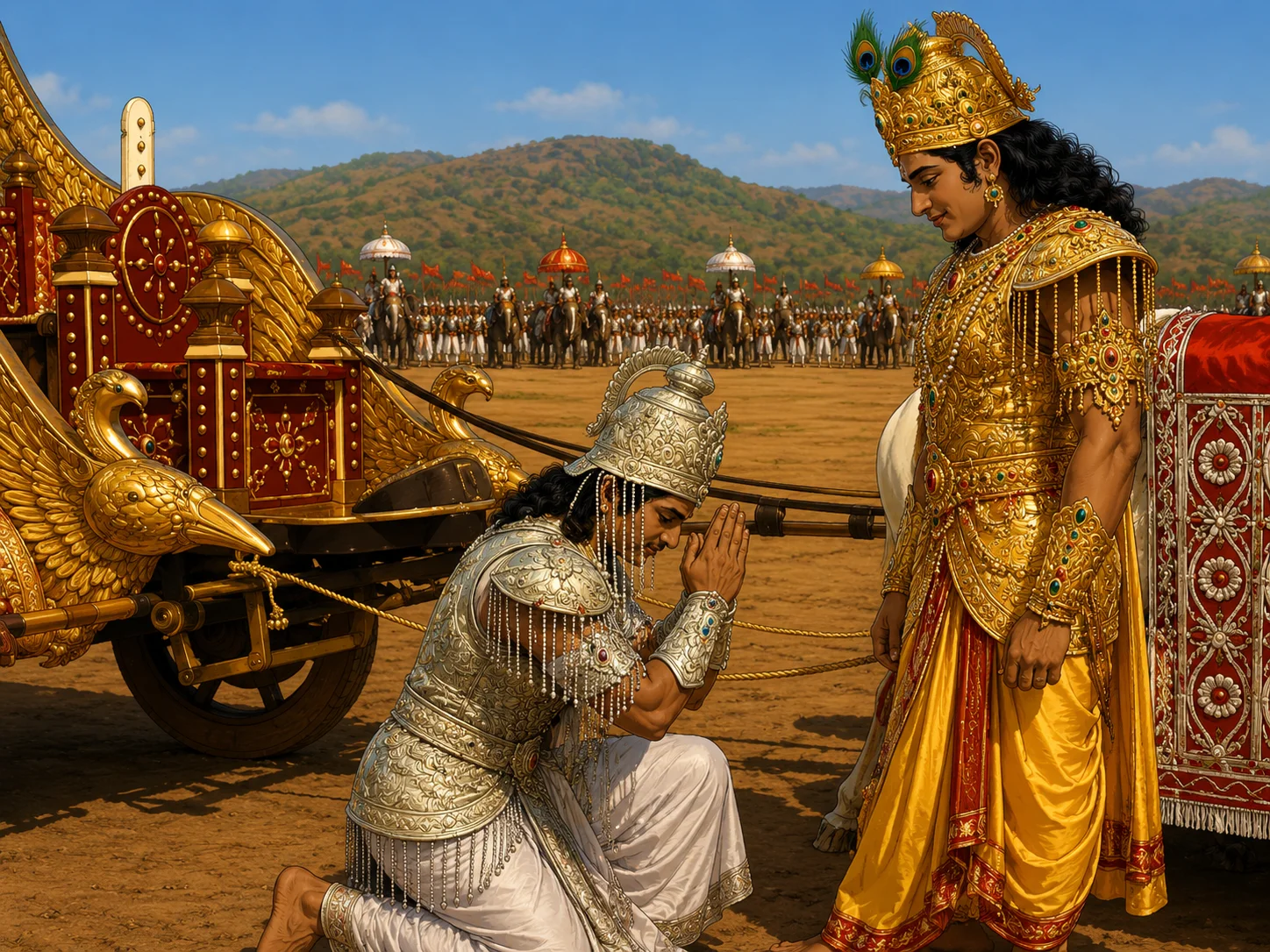
On the battlefield of Kurukshetra, Arjuna is frozen between duty and grief. Krishna has just explained the three qualities and their grip on human life. Now he points to the way beyond them: freedom from the cycle of bodily suffering.
03
आपके जीवन में
आज के जीवन में महत्व
You watch your body age in the mirror, then feel the panic rise with every ache, deadline, and loss. This verse says the deepest part of you is not trapped in that churn.
सार
“There is relief in seeing that suffering belongs to change, not to what is deepest in you.”
A person who rises above the three qualities that shape the body is no longer bound by birth, death, old age, or sorrow.
भगवद् गीता 14.20 किसने कहा है?
यह श्लोक Krishna द्वारा कहा गया है, कुरुक्षेत्र की भूमि पर, अध्याय "गुणत्रय विभाग योग" में।
भगवद् गीता 14.20 किस अध्याय में है?
श्लोक 20 भगवद् गीता के 14वें अध्याय में है — गुणत्रय विभाग योग। इस अध्याय में कुल 27 श्लोक हैं।
भगवद् गीता 14.20 आज के जीवन में क्यों प्रासंगिक है?
You watch your body age in the mirror, then feel the panic rise with every ache, deadline, and loss. This verse says the deepest part of you is not trapped in that churn.
It shifts attention from managing symptoms of change to seeing the self as untouched by them.
इस श्लोक का अर्थ
A person who rises above the three qualities that shape the body is no longer bound by birth, death, old age, or sorrow.
संदर्भ और टिप्पणी
On the battlefield of Kurukshetra, Arjuna is frozen between duty and grief. Krishna has just explained the three qualities and their grip on human life. Now he points to the way beyond them: freedom from the cycle of bodily suffering.
आज के जीवन में महत्व
You watch your body age in the mirror, then feel the panic rise with every ache, deadline, and loss. This verse says the deepest part of you is not trapped in that churn.
“There is relief in seeing that suffering belongs to change, not to what is deepest in you.”
संबंधित विषय: gunas (47 श्लोक), moksha (34 श्लोक)