As rivers flow into the sea and the sea remains steady, so desires may enter a disciplined person without disturbing inner peace. The person who wants pleasures does not find peace.
— Krishna
❋
Bhagavad Gita · 2.70
Hindi · हिन्दी
जैसे सम्पूर्ण नदियोंका जल चारों ओरसे जलद्वारा परिपूर्ण समुद्रमें आकर मिलता है, पर समुद्र अपनी मर्यादामें अचल प्रतिष्ठित रहता है ऐसे ही सम्पूर्ण भोगपदार्थ जिस संयमी मनुष्य को विकार उत्पन्न किये बिना ही उसको प्राप्त होते हैं, वही मनुष्य परमशान्तिको प्राप्त होता है, भोगोंकी कामनावाला नहीं ॥
The verse in reading order — each Sanskrit word with its meaning beneath. Tap a word to focus on it.
आपूर्यमाणम्being filledअचल-प्रतिष्ठम्firmly established, unmovingसमुद्रम्the seaआपःwatersप्रविशन्तिenterयद्वत्just asतद्वत्soकामाःdesiresयम्whomप्रविशन्तिenterसर्वेallसःthat oneशान्तिम्peaceआप्नोतिattainsनnotकाम-कामीone who desires pleasures
Read literallybeing filled · firmly established, unmoving · the sea · waters · enter · just as · so · desires · whom · enter · all · that one · peace · attains · not · one who desires pleasures
Understanding the verse
✦
Rivers pour into the sea and the sea stays level; Krishna wants desire met like that.
A person can meet desire without being shaken by it. Peace belongs to the one who stays steady, not to the one chasing pleasure.
02
On the battlefield
Context & commentary
Arjuna is being taught how a human being can remain steady under pressure. Krishna compares the disciplined person to the sea: all rivers enter it, yet it keeps its depth. That inner steadiness is what makes peace possible.
03
In your life
What it looks like today
Walking through a busy market before Diwali, a man feels a hundred wants rise at once. He notices them, buys what the family needs, and keeps his calm, like the sea taking in rivers.
The takeaway
“You do not have to fight every desire; you can let it move through without letting it steer you.”
A person can meet desire without being shaken by it. Peace belongs to the one who stays steady, not to the one chasing pleasure.
Who speaks Bhagavad Gita 2.70?
Krishna speaks this verse, on the battlefield of Kurukshetra, in the chapter titled "Sankhya Yoga" (The Yoga of Knowledge).
Which chapter of the Bhagavad Gita contains verse 2.70?
Verse 70 sits in Chapter 2 of the Bhagavad Gita — Sankhya Yoga, "The Yoga of Knowledge". The chapter has 72 verses in total.
Why does Bhagavad Gita 2.70 matter today?
Walking through a busy market before Diwali, a man feels a hundred wants rise at once. He notices them, buys what the family needs, and keeps his calm, like the sea taking in rivers.
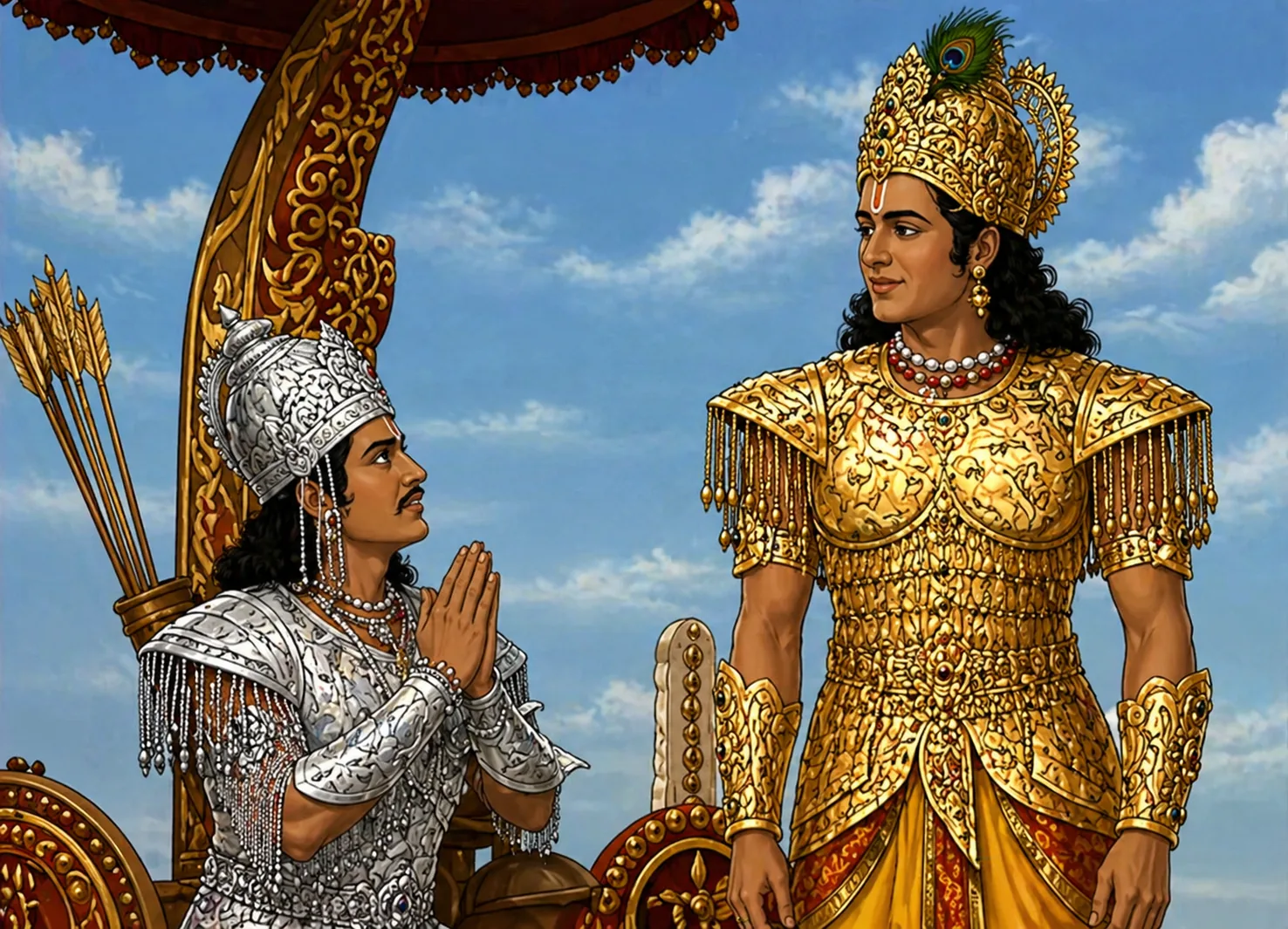
Rivers pour into the sea and the sea stays level; Krishna wants desire met like that.
What this verse means
A person can meet desire without being shaken by it. Peace belongs to the one who stays steady, not to the one chasing pleasure.
Context & commentary
Arjuna is being taught how a human being can remain steady under pressure. Krishna compares the disciplined person to the sea: all rivers enter it, yet it keeps its depth. That inner steadiness is what makes peace possible.
What it looks like today
Walking through a busy market before Diwali, a man feels a hundred wants rise at once. He notices them, buys what the family needs, and keeps his calm, like the sea taking in rivers.
“You do not have to fight every desire; you can let it move through without letting it steer you.”
Explore related themes: vairagya (51 verses), equanimity (23 verses), kama (23 verses)