Two minutes18.66 and 18.78
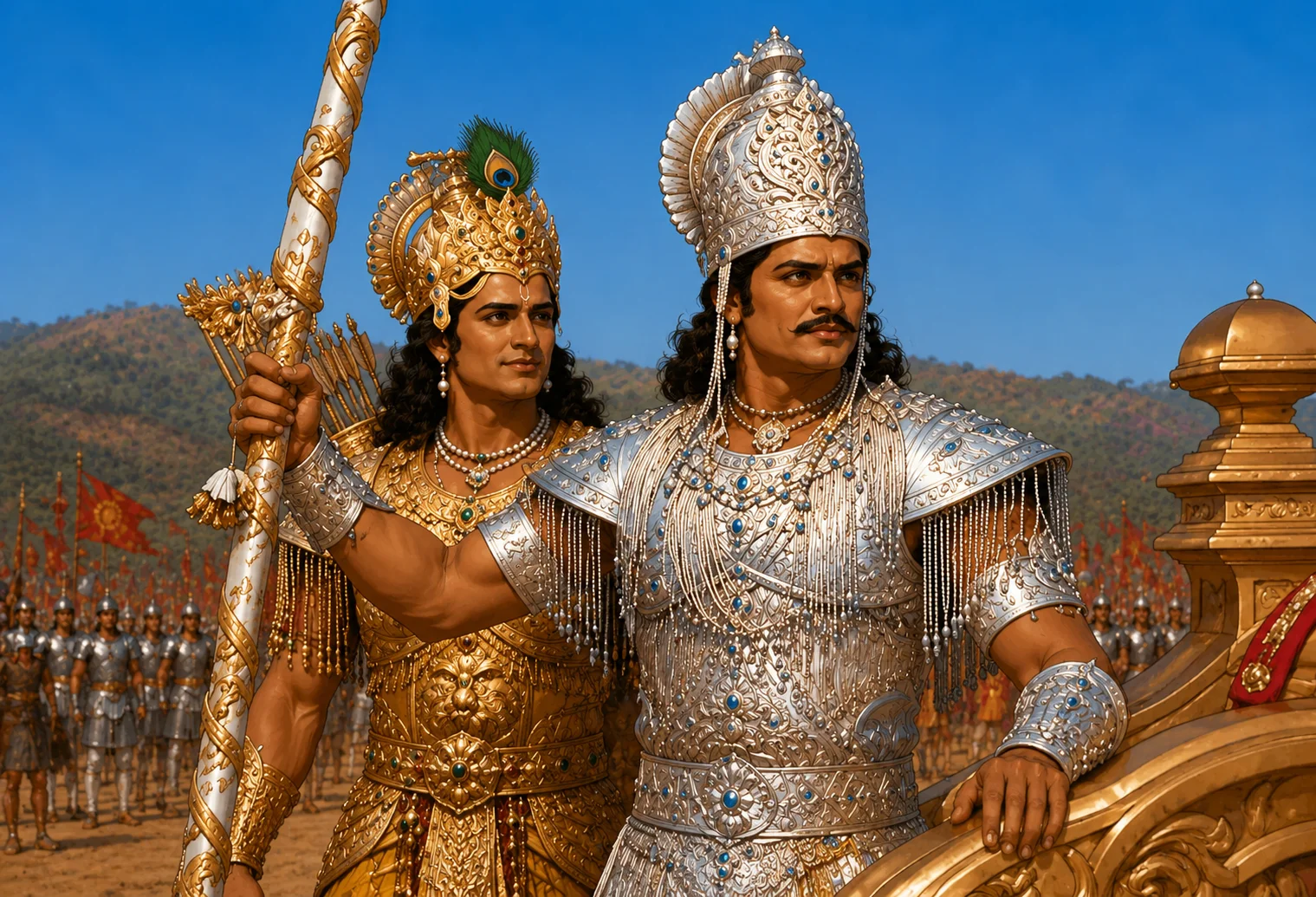
Two verses from the end of the Gita. In 18.66 Krishna tells Arjuna to take refuge in him and not to grieve; Sri Vaishnavas call it the charama shloka, the final teaching. 18.78 is the last verse of the Gita, spoken by Sanjaya, who has been narrating the whole dialogue to the blind king Dhritarashtra.
सर्वधर्मान्परित्यज्य मामेकं शरणं व्रज । अहं त्वा सर्वपापेभ्यो मोक्षयिष्यामि मा शुचः ॥
“Abandon all duties and take refuge in Me alone. I will free you from all wrongdoing; do not grieve.”
यत्र योगेश्वरः कृष्णो यत्र पार्थो धनुर्धरः । तत्र श्रीर्विजयो भूतिर्ध्रुवा नीतिर्मतिर्मम ॥
“Where Krishna, the master of yoga, is present, and where Arjuna, the bow-bearer, is present, there are prosperity, victory, glory, and firm justice. This is my conviction.”
Chapter 12 or chapter 15
The two shortest chapters, 20 verses each. Chapter 12 is on devotion: Arjuna asks whether it is better to worship Krishna in form or the formless, and the chapter ends with Krishna describing, quality by quality, the devotee who is dear to him (12.13 to 12.20).
Chapter 15 describes the world as an ashvattha tree with its roots above, and ends with Krishna naming himself Purushottama. Some families and ashrams chant chapter 15 before meals, so many people already know it by heart.
अद्वेष्टा सर्वभूतानां मैत्रः करुण एव च । निर्ममो निरहङ्कारः समदुःखसुखः क्षमी ॥
“One who hates no being, is friendly and compassionate, free from possessiveness and ego, equal in pleasure and pain, and forgiving.”
Chapter 2
Where Krishna starts teaching after Arjuna sits down in chapter 1. It holds 2.47 on doing the work without holding on to its fruit, and closes with Arjuna asking how a person of steady mind speaks, sits and walks (2.54), and Krishna’s answer in the last 18 verses. 72 verses · 12 min in English · 18 min to recite.
कर्मण्येवाधिकारस्ते मा फलेषु कदाचन । मा कर्मफलहेतुर्भूर्मा ते सङ्गोऽस्त्वकर्मणि ॥
“You have a right to action alone, never to its fruits. Do not become the cause of the result, and do not cling to inaction.”
Chapter 18
The last chapter, read on the day the dialogue took place. Krishna gathers up the teaching on action, renunciation and devotion, tells Arjuna to reflect on all of it and then decide (18.63), and Arjuna answers that his confusion is gone and he will do as Krishna says (18.73). 78 verses · 13 min in English · 20 min to recite.
इति ते ज्ञानमाख्यातं गुह्याद्गुह्यतरं मया । विमृश्यैतदशेषेण यथेच्छसि तथा कुरु ॥
“Thus I have explained to you the most secret wisdom. Reflect on it fully, and then do as you wish.”
Chapters 1 and 11
Both chapters are scenes a child can picture. Chapter 1 has the armies, the conch shells and Arjuna putting down his bow. Chapter 11 has Arjuna asking to see Krishna’s universal form and being frightened by it. Together they are 102 verses, about 17 minutes in English.
श्री भगवानुवाचकालोऽस्मि लोकक्षयकृत्प्रवृद्धोलोकान्समाहर्तुमिह प्रवृत्तः । ऋतेऽपि त्वां न भविष्यन्ति सर्वेयेऽवस्थिताः प्रत्यनीकेषु योधाः ॥
“The Blessed Lord said: I am Time, the great destroyer of worlds, here to end all beings. Even without you, the warriors standing in the opposing ranks will not survive.”
The whole Gita
All 700 verses take about two hours to read in English or about three to recite in Sanskrit. Start a few days early and it is shorter each day: the 18-day plan is 4 to 13 minutes a day, and the Gita Jayanti reading plan has 9-day and 3-day versions.