The verse in reading order — each Sanskrit word with its meaning beneath. Hover a word to focus on it.
कर्मणिin actionएवonlyअधिकारःrightतेyourमाnotफलेषुin fruitsकदाचनat any timeमाnotकर्मफलहेतुःcause of the fruit of actionभूःbecomeमाnotतेyourसङ्गःattachmentअस्तुlet there beअकर्मणिin inaction
Read literallyin action · only · right · your · not · in fruits · at any time · not · cause of the fruit of action · become · not · your · attachment · let there be · in inaction
Understanding the verse
✦
It shifts attention from controlling outcomes to carrying out the action cleanly.
You control your action, not what it produces. Do your duty without chasing the reward or getting attached to doing nothing.
02
On the battlefield
Context & commentary
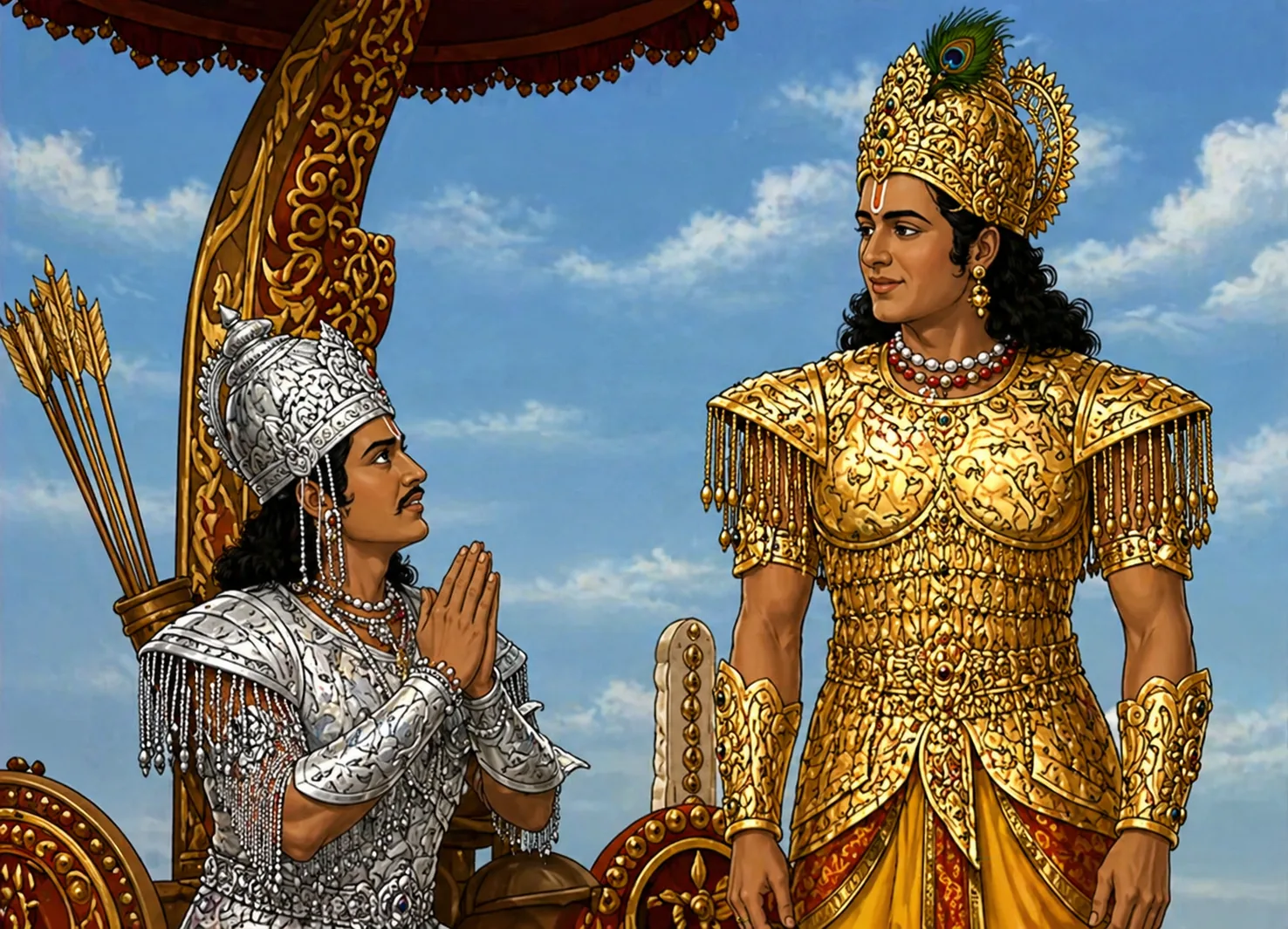
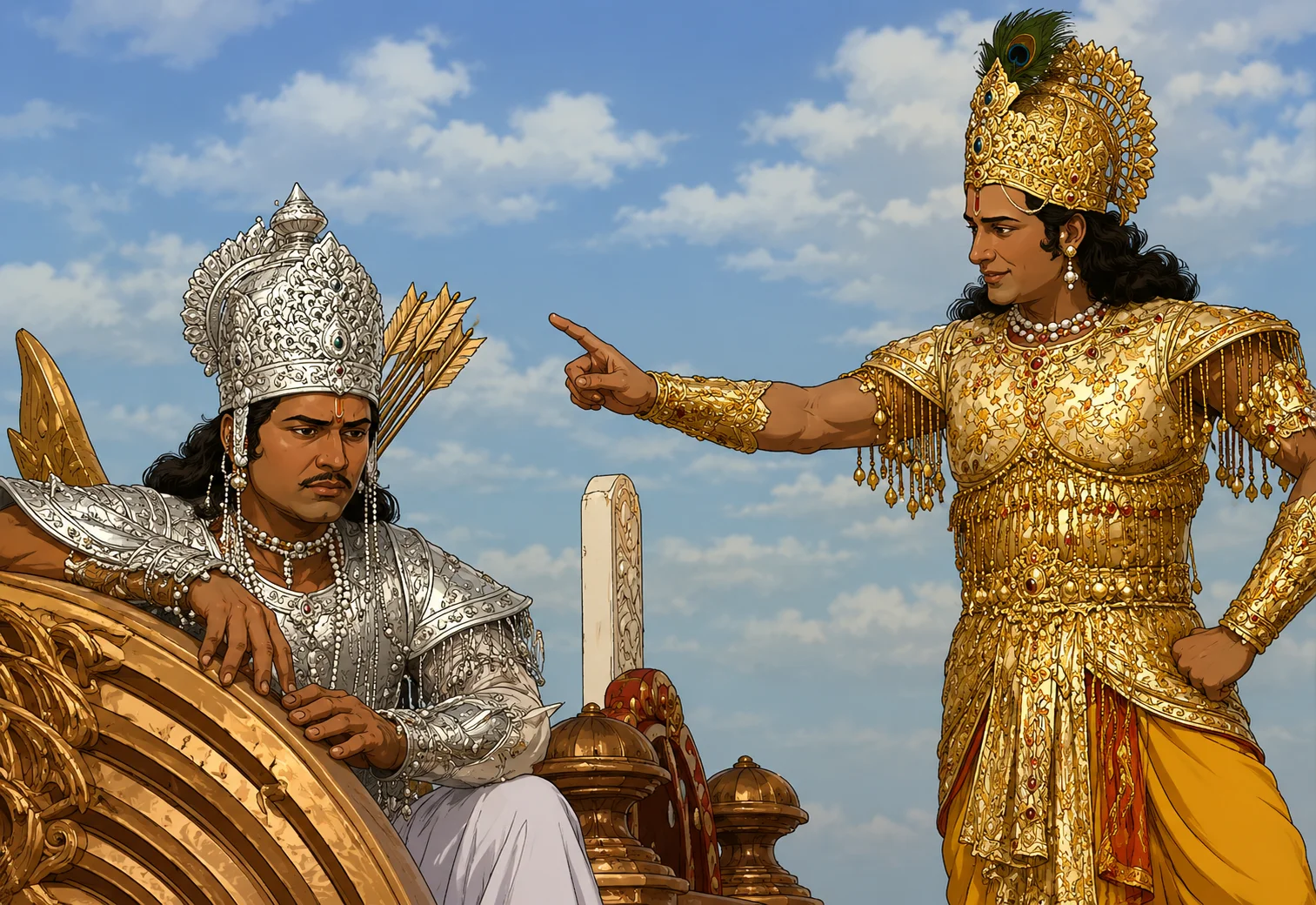
On the Kurukshetra battlefield, Arjuna is frozen and Krishna begins rebuilding his sense of duty. Here Krishna draws the first hard line: act because it is yours to do, not because you can own what comes after.
03
In your life
Why this verse still matters
You send the apology text after midnight, then keep rereading it for the perfect reply. This verse cuts that loop: speak, act, and stop trying to control the response.
The takeaway
“There is relief in giving your full effort without carrying the burden of the result.”
You control your action, not what it produces. Do your duty without chasing the reward or getting attached to doing nothing.
Who speaks Bhagavad Gita 2.47?
Krishna speaks this verse, on the battlefield of Kurukshetra, in the chapter titled "Sankhya Yoga" (The Yoga of Knowledge).
Which chapter of the Bhagavad Gita contains verse 2.47?
Verse 47 sits in Chapter 2 of the Bhagavad Gita — Sankhya Yoga, "The Yoga of Knowledge". The chapter has 72 verses in total.
Why does Bhagavad Gita 2.47 matter today?
You send the apology text after midnight, then keep rereading it for the perfect reply. This verse cuts that loop: speak, act, and stop trying to control the response.
It shifts attention from controlling outcomes to carrying out the action cleanly.
What this verse means
You control your action, not what it produces. Do your duty without chasing the reward or getting attached to doing nothing.
Context & commentary
On the Kurukshetra battlefield, Arjuna is frozen and Krishna begins rebuilding his sense of duty. Here Krishna draws the first hard line: act because it is yours to do, not because you can own what comes after.
Why this verse still matters
You send the apology text after midnight, then keep rereading it for the perfect reply. This verse cuts that loop: speak, act, and stop trying to control the response.
“There is relief in giving your full effort without carrying the burden of the result.”
Explore related themes: karma yoga (55 verses), attachment (20 verses), nishkama (14 verses)