Among those qualities, sattva—because it is pure and luminous and free from affliction—binds the embodied being through attachment to happiness and to knowledge, O sinless one.
— Krishna
❋
Bhagavad Gita · 14.6
Hindi · हिन्दी
हे पापरहित अर्जुन उन गुणोंमें सत्त्वगुण निर्मल स्वच्छ होनेके कारण प्रकाशक और निर्विकार है । वह सुख और ज्ञानकी आसक्तिसे देहीको बाँधता है ॥
The verse in reading order — each Sanskrit word with its meaning beneath. Hover a word to focus on it.
तत्रthere, among themसत्त्वम्sattvaनिर्मलत्वात्because of purityप्रकाशकम्luminous, illuminatingअनामयम्free from afflictionसुखसङ्गेनthrough attachment to happinessबध्नातिbindsज्ञानसङ्गेनthrough attachment to knowledgeचandअनघO sinless one
Read literallythere, among them · sattva · because of purity · luminous, illuminating · free from affliction · through attachment to happiness · binds · through attachment to knowledge · and · O sinless one
Understanding the verse
✦
It shifts the mind from chasing refined states to seeing how attachment operates even inside them.
Even purity can become a chain when you cling to comfort or to being wise. Sattva brings light, but attachment to that light still binds.
02
On the battlefield
Context & commentary
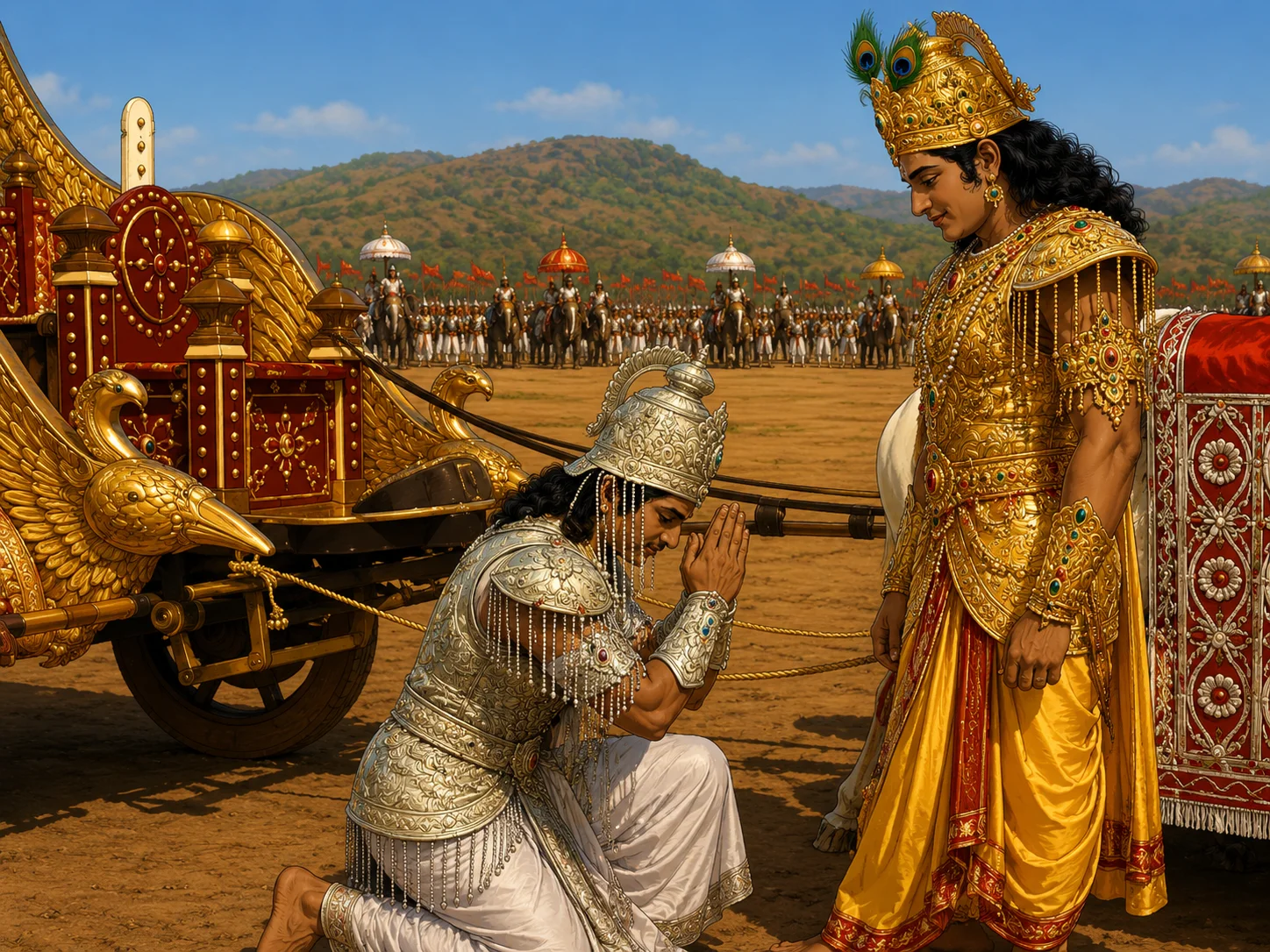
On Kurukshetra, with Arjuna frozen before battle, Krishna explains the three gunas. After naming sattva as pure and illuminating, he shows the hidden trap: even clarity can bind when a person becomes attached to comfort or to the pride of understanding.
03
In your life
Why this verse still matters
You finally feel calm after weeks of stress, then panic at the thought of losing that calm. You start guarding the feeling instead of living. The grip has simply changed shape.
The takeaway
“It warns that even good states can trap you when you start clinging to them.”
Explore related themes: gunas(47 verses), sattva(26 verses)
Common questions
What does Bhagavad Gita 14.6 mean?
Even purity can become a chain when you cling to comfort or to being wise. Sattva brings light, but attachment to that light still binds.
Who speaks Bhagavad Gita 14.6?
Krishna speaks this verse, on the battlefield of Kurukshetra, in the chapter titled "Gunatraya Vibhaga Yoga" (The Three Modes of Material Nature).
Which chapter of the Bhagavad Gita contains verse 14.6?
Verse 6 sits in Chapter 14 of the Bhagavad Gita — Gunatraya Vibhaga Yoga, "The Three Modes of Material Nature". The chapter has 27 verses in total.
Why does Bhagavad Gita 14.6 matter today?
You finally feel calm after weeks of stress, then panic at the thought of losing that calm. You start guarding the feeling instead of living. The grip has simply changed shape.
It shifts the mind from chasing refined states to seeing how attachment operates even inside them.
What this verse means
Even purity can become a chain when you cling to comfort or to being wise. Sattva brings light, but attachment to that light still binds.
Context & commentary
On Kurukshetra, with Arjuna frozen before battle, Krishna explains the three gunas. After naming sattva as pure and illuminating, he shows the hidden trap: even clarity can bind when a person becomes attached to comfort or to the pride of understanding.
Why this verse still matters
You finally feel calm after weeks of stress, then panic at the thought of losing that calm. You start guarding the feeling instead of living. The grip has simply changed shape.
“It warns that even good states can trap you when you start clinging to them.”
Explore related themes: gunas (47 verses), sattva (26 verses)