In inner clarity, all suffering falls away. For one whose mind is clear, understanding settles quickly.
— Krishna
❋
Bhagavad Gita · 2.65
Hindi · हिन्दी
वशीभूत अन्तःकरणवाला कर्मयोगी साधक रागद्वेषसे रहित अपने वशमें की हुई इन्द्रियोंके द्वारा विषयोंका सेवन करता हुआ अन्तःकरणकी निर्मलता को प्राप्त हो जाता है । निर्मलता प्राप्त होनेपर साधकके सम्पूर्ण दुःखोंका नाश हो जाता है और ऐसे शुद्ध चित्तवाले साधककी बुद्धि निःसन्देह बहुत जल्दी परमात्मामें स्थिर हो जाती है ॥
The verse in reading order — each Sanskrit word with its meaning beneath. Hover a word to focus on it.
प्रसादेin clarity/serenityसर्वदुःखानाम्of all sorrowsहानिःendingअस्यof this oneप्रसन्नचेतसःof one with a clear mindहिindeedआशुquicklyबुद्धिःunderstandingपर्यवतिष्ठतेbecomes firmly established
Read literallyin clarity/serenity · of all sorrows · ending · of this one · of one with a clear mind · indeed · quickly · understanding · becomes firmly established
Understanding the verse
✦
It shifts attention from emotional turbulence to the clarity that dissolves it.
When the mind becomes calm and clear, suffering drops away and understanding becomes steady very quickly.
02
On the battlefield
Context & commentary
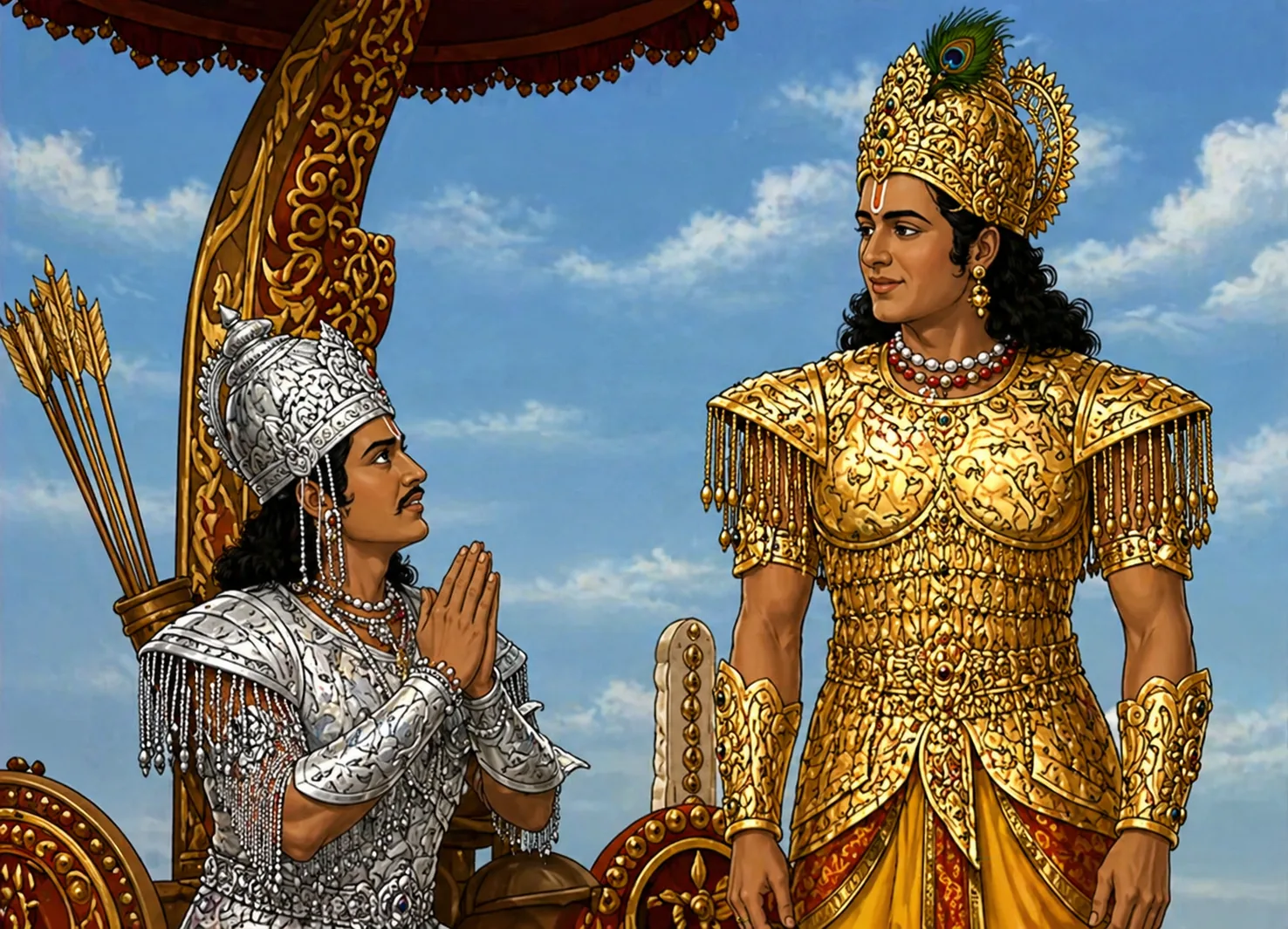
On Kurukshetra, Arjuna is frozen between grief and duty. Krishna keeps tracing the chain backward: craving, anger, confusion. Here he shows the other direction too — when the mind becomes clear, suffering falls away and the mind can settle in truth.
03
In your life
Why this verse still matters
You finally stop arguing with a message you already know is true. The tightness in your chest loosens, and the next right thought arrives without force.
The takeaway
“There is relief in realizing that peace of mind is not a luxury; it is the doorway out of suffering.”
When the mind becomes calm and clear, suffering drops away and understanding becomes steady very quickly.
Who speaks Bhagavad Gita 2.65?
Krishna speaks this verse, on the battlefield of Kurukshetra, in the chapter titled "Sankhya Yoga" (The Yoga of Knowledge).
Which chapter of the Bhagavad Gita contains verse 2.65?
Verse 65 sits in Chapter 2 of the Bhagavad Gita — Sankhya Yoga, "The Yoga of Knowledge". The chapter has 72 verses in total.
Why does Bhagavad Gita 2.65 matter today?
You finally stop arguing with a message you already know is true. The tightness in your chest loosens, and the next right thought arrives without force.

It shifts attention from emotional turbulence to the clarity that dissolves it.
What this verse means
When the mind becomes calm and clear, suffering drops away and understanding becomes steady very quickly.
Context & commentary
On Kurukshetra, Arjuna is frozen between grief and duty. Krishna keeps tracing the chain backward: craving, anger, confusion. Here he shows the other direction too — when the mind becomes clear, suffering falls away and the mind can settle in truth.
Why this verse still matters
You finally stop arguing with a message you already know is true. The tightness in your chest loosens, and the next right thought arrives without force.
“There is relief in realizing that peace of mind is not a luxury; it is the doorway out of suffering.”
Explore related themes: manas (49 verses), buddhi (26 verses), equanimity (23 verses)